Mars Rover Milestones and the Climate Cost of the Orbital Gold Rush

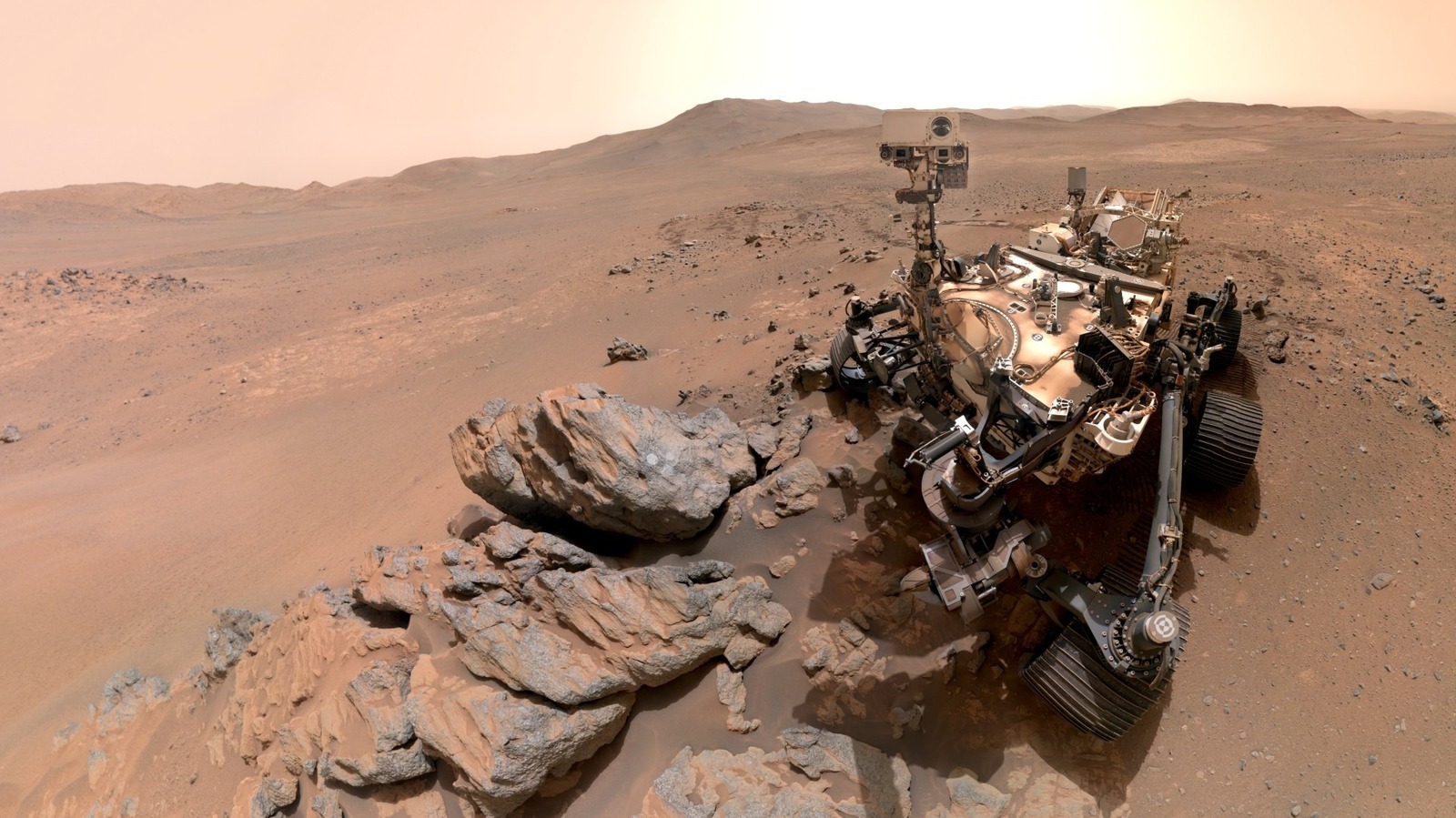
- NASA's Perseverance rover has successfully reached the 'Lac de Charmes' region on Mars, documenting ancient geological formations that date back nearly 3.9 billion years.
- A new study warns that the rapid expansion of satellite megaconstellations is projected to deposit 870 metric tons of soot into the upper atmosphere annually by 2029.
- Scientists caution that the soot's cooling effect acts as an 'unregulated geoengineering' experiment, necessitating immediate oversight before environmental impacts become irreparable.
Perseverance Captures Martian ‘Wild West’
NASA’s Perseverance rover continues to push the boundaries of planetary exploration. Having spent five years investigating the Jezero Crater—a site long considered a prime candidate for uncovering evidence of ancient microbial life—the rover has recently embarked on its most ambitious trek yet. Venturing beyond the crater’s rim, Perseverance has reached the “Lac de Charmes” region, where it captured its sixth mission selfie.
The self-portrait, a composite of 61 high-resolution images, showcases the rover at a rocky outcrop identified as “Arathusa.” According to NASA officials, this region represents some of the most geologically significant terrain explored to date. The rover’s subsequent traversal to an area dubbed “Arbot” has yielded panoramic imagery revealing skyscraper-sized boulders, remnants of a meteorite impact dating back nearly 3.9 billion years.
“These are likely the oldest rocks we will investigate during this mission,” noted Ken Farley, deputy project scientist at Caltech. The rover is currently analyzing these formations, including a rare volcanic dike, to better understand the Martian geological timeline before moving south toward the “Gardevarri” site.
The Hidden Environmental Toll of Satellite Megaconstellations
While robotics explore the red planet, Earth faces its own orbital challenges. The rapid proliferation of satellite megaconstellations—led by SpaceX’s Starlink and mirrored by competitors like Amazon—has revolutionized global connectivity, but it comes with a mounting environmental price tag.
A recent study published in Earth’s Future highlights a concerning trend: the sheer volume of rocket launches required to maintain these fleets is significantly altering the composition of the upper atmosphere. By 2029, researchers estimate that launch operations will deposit approximately 870 metric tons of soot into the stratosphere annually.
Unintended Geoengineering Consequences
Unlike lower-atmosphere pollutants, soot deposited at higher altitudes can linger for years, potentially obstructing sunlight and inducing a localized cooling effect. While this might seem counterintuitive to global warming trends, experts are raising red flags.
- Unregulated Geoengineering: Researchers describe the current space industry output as a form of unregulated, small-scale geoengineering.
- Escalating Impact: Satellite launches accounted for 35% of the space sector’s climate footprint in 2020; this figure is projected to rise to 42% by 2029.
- The Window for Regulation: Eloise Marais of University College London warns that while the immediate climate impact is currently manageable, proactive regulation is essential before the environmental damage becomes irreversible.
As the private space sector continues to accelerate, the scientific community is calling for a more rigorous environmental framework to ensure that our pursuit of orbital progress does not come at the expense of our atmospheric health.