Mars Rover Milestones and the Growing Climate Impact of Satellite Megaconstellations

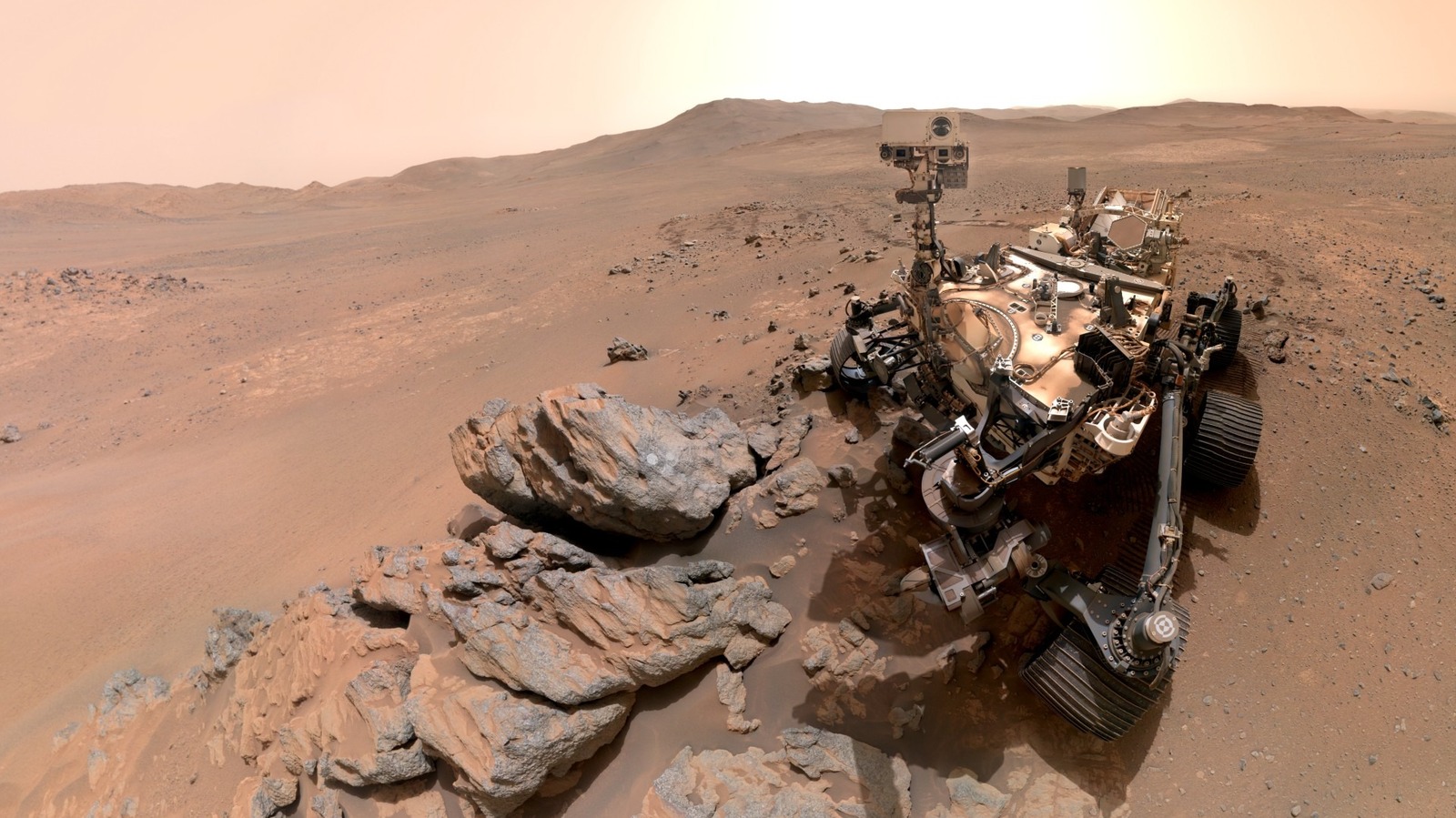
- NASA's Perseverance rover has reached new, scientifically rich territory west of Jezero Crater, documenting the journey with a unique robotic-arm selfie.
- A new study warns that the rapid deployment of satellite megaconstellations could lead to 870 metric tons of soot in the atmosphere by 2029, potentially acting as an unregulated form of climate geoengineering.
- Experts argue that while the space sector's climate impact is currently localized, immediate policy action is required to prevent serious, long-term environmental consequences.
Perseverance Rover Continues Its Historic Journey Through Mars’ ‘Wild West’
NASA’s Perseverance rover has hit a new milestone in its mission to uncover the secrets of the Red Planet. Having spent five years meticulously exploring the Jezero Crater—a site long considered a prime candidate for identifying ancient microbial life—the rover has now pushed further west than ever before. This latest excursion has brought the rover to a region NASA scientists are calling the “Wild West” of Mars, characterized by unique geological features and ancient, skyscraper-sized rock formations.
To commemorate the journey, Perseverance captured a stunning high-resolution selfie at a rocky outcrop named “Arathusa” in the “Lac de Charmes” region. The image, composed of 61 individual photos taken by the rover’s robotic arm, showcases the rugged terrain the vehicle is currently navigating. According to Ken Farley, deputy project scientist at Caltech, the team is investigating some of the oldest rocks encountered during the entire mission, including what appears to be a volcanic dike—a remnant of magma that solidified billions of years ago.
As the rover moves toward its next destination, “Gardevarri,” it continues to play a vital role in our understanding of Martian history through surface grinding, chemical analysis, and rock core sampling.
The Hidden Climate Cost of Satellite Megaconstellations
While NASA continues to push the boundaries of planetary exploration, the rapid growth of the satellite industry in low-Earth orbit has triggered serious environmental concerns. The proliferation of satellite “megaconstellations,” driven largely by commercial initiatives such as SpaceX’s Starlink, has led to an exponential increase in annual rocket launches. While these networks promise global connectivity, they come with a mounting atmospheric price tag.
A recent study published in the journal Earth’s Future highlights a troubling trajectory: by 2029, these launch activities are projected to deposit approximately 870 metric tons of soot into the upper atmosphere annually. Unlike pollution at ground level, soot in the stratosphere can persist for years, potentially altering the way Earth interacts with solar radiation.
The Risks of Unregulated Geoengineering
Researchers warn that this buildup of soot could result in a “mild cooling effect” by partially blocking sunlight. While this might appear beneficial amidst global warming, lead author Eloise Marais of University College London warns that it amounts to an “unregulated geoengineering experiment.”
- Long-term Atmospheric Persistence: Soot injected into the upper atmosphere has a significantly more profound climate impact than surface-level emissions.
- Rising Contribution: Megaconstellation launches were responsible for roughly 35% of the space sector’s climate impact in 2020; this is expected to climb to 42% by 2029.
- Urgent Regulation Needed: Experts suggest that because the current impact is still manageable, policy changes and environmental oversight must be implemented now before the damage becomes irreversible.
As the space industry scales up, the scientific community is calling for a balanced approach that weighs the benefits of global connectivity against the long-term integrity of Earth’s atmosphere.