AMD Expands FSR 4.1 AI Upscaling Support to Older Radeon GPUs

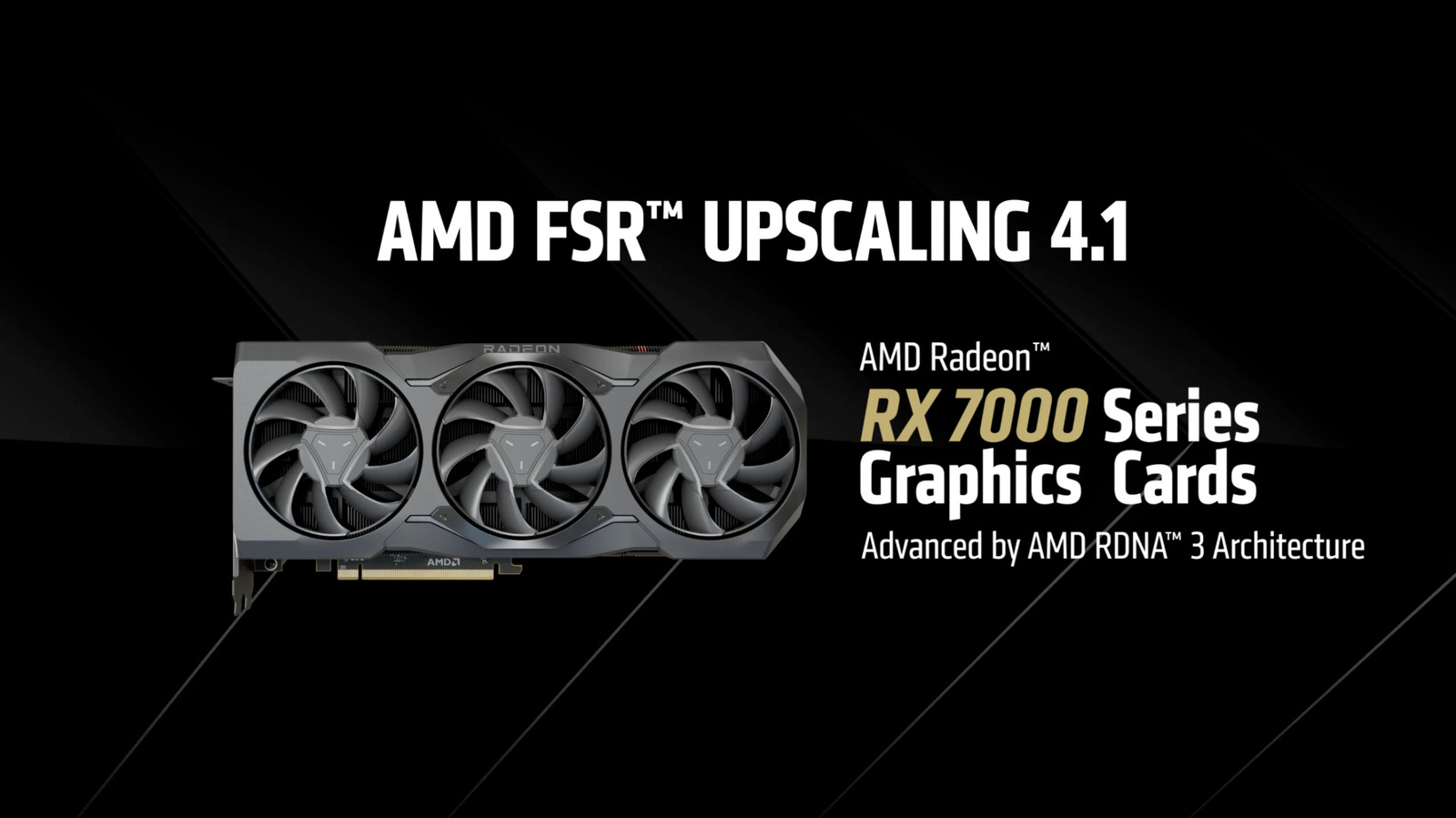
- AMD is expanding its AI-powered FSR 4.1 upscaling to RDNA 3 (RX 7000) cards starting this July.
- The engineering team optimized the model to run efficiently on hardware lacking specific native AI cores, with support for over 300 games at launch.
- Legacy RDNA 2 users can expect official FSR 4.1 support to arrive in early 2027.
Bridging the Generational Gap: AMD Brings FSR 4.1 to Legacy Hardware
AMD has officially announced a significant expansion for its FidelityFX Super Resolution (FSR) technology. Starting this July, the highly anticipated FSR 4.1, which utilizes advanced AI-driven upscaling, will no longer be exclusive to the cutting-edge Radeon RX 9000-series. The company is rolling out support for its existing RDNA 3 architecture, effectively bringing premium visual fidelity and performance gains to a wider user base.
Overcoming Hardware Limitations
Historically, sophisticated upscaling solutions required dedicated on-chip hardware to handle intensive AI workloads. Many industry experts questioned whether older Radeon RX 7000 cards possessed the necessary silicon to maintain smooth frame rates while running FSR 4.1. However, Jack Huynh, AMD’s Senior Vice President and General Manager of Computing Graphics, addressed these concerns in a recent briefing.
According to Huynh, the engineering team spent months “carefully tuning, optimizing, and validating” the machine learning models. The development process focused heavily on two critical areas:
- Memory Efficiency: Reducing the VRAM footprint to ensure the algorithm doesn’t bottleneck performance on cards with lower memory bandwidth.
- Visual Stability: Implementing advanced anti-ghosting techniques to mitigate artifacts during rapid motion, which is often a challenge for non-native AI upscaling implementations.
A Massive Library of Supported Titles
The transition is not just a software patch; it represents a major push for platform longevity. AMD has conducted rigorous testing across hundreds of unique PC configurations, ensuring that the technology is stable across diverse hardware setups. At launch, users can expect support for over 300 PC titles, ensuring that gamers with RX 7000-series cards can immediately experience the benefits of higher frame rates and crisper image reconstruction.
Looking Ahead: RDNA 2 and Beyond
While RDNA 3 users are the immediate beneficiaries, AMD has also shared a roadmap for legacy support. Owners of RDNA 2-based graphics cards will be pleased to know that support is currently in development, with a full rollout scheduled for early 2027. This strategy stands in stark contrast to competitors like NVIDIA, which often restricts advanced software features—such as certain iterations of DLSS frame generation—strictly to their latest “Ada Lovelace” and subsequent architectures.
By prioritizing optimization for existing hardware, AMD is positioning itself as a more consumer-friendly alternative for gamers who prefer to keep their GPUs for multiple upgrade cycles. As the market shifts toward AI-centric rendering, this commitment to backporting new technology will likely be a decisive factor for Radeon loyalists.