Mars Exploration and Orbital Footprints: The Dual Frontiers of Space Science

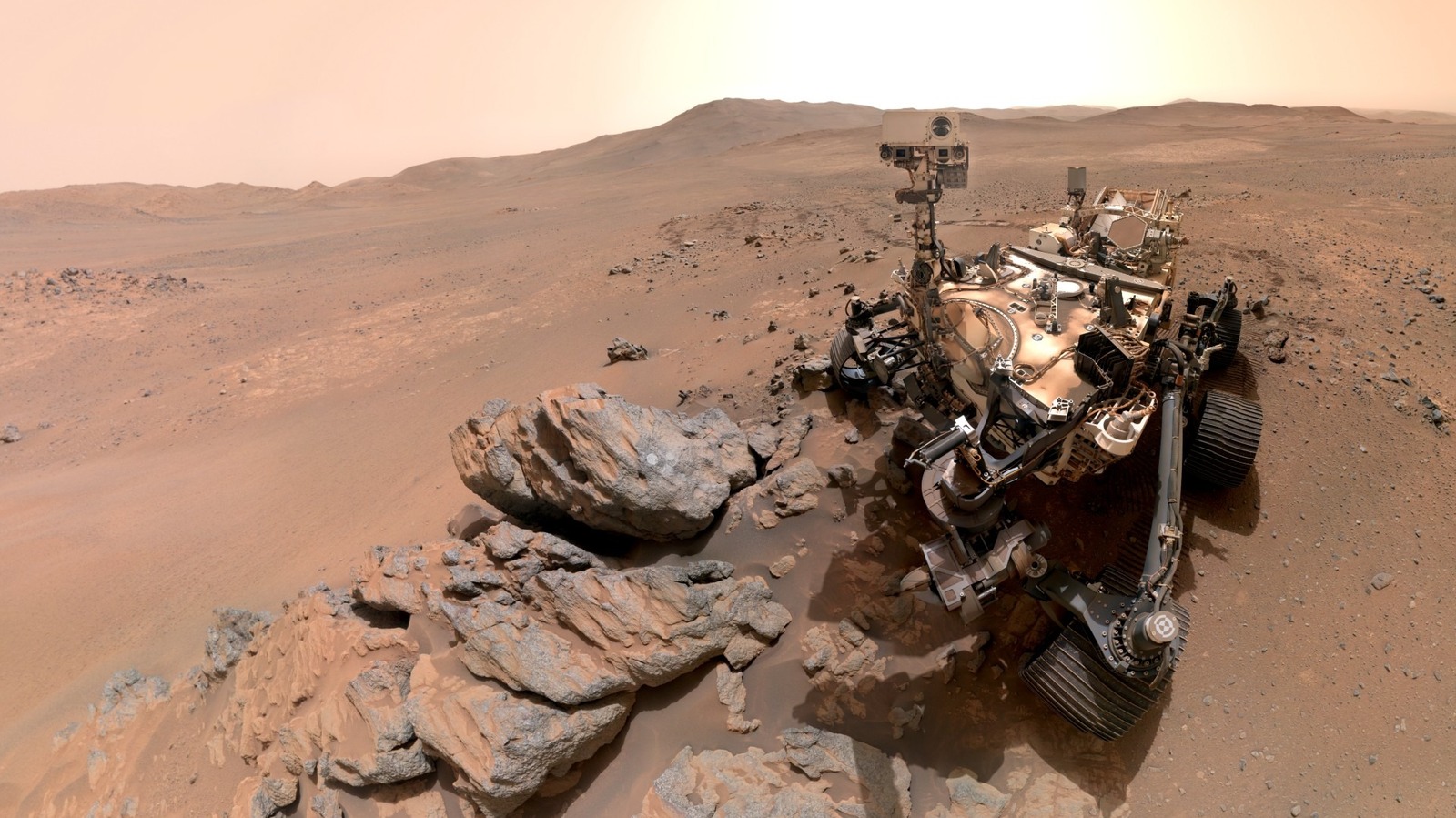
- NASA's Perseverance rover has successfully captured a new selfie while exploring ancient, skyscraper-sized geological formations near Mars' Jezero Crater.
- New research highlights that the rapid growth of satellite megaconstellations is projected to dump 870 metric tons of soot into the upper atmosphere annually by 2029.
- Scientists warn that this unregulated launch activity could lead to unintended climate consequences, functioning as a form of accidental geoengineering that requires immediate attention.
Perseverance Captures Martian ‘Wild West’
NASA’s Perseverance rover continues to push the boundaries of planetary exploration, recently documenting its sixth-ever selfie while navigating a remote, geologically rich region west of Mars’ Jezero Crater. This latest milestone highlights the rover’s transition into uncharted territory, specifically a rocky outcrop known as “Arathusa” located within the “Lac de Charmes” region.
The high-resolution selfie, composed of 61 individual frames captured by the rover’s robotic arm, showcases the rugged, ancient topography that mission scientists consider some of the most scientifically significant terrain explored to date. Following this, the rover moved toward the “Arbot” region, where a 46-image panorama revealed skyscraper-sized boulders—relics from a massive meteorite impact nearly 3.9 billion years ago.
According to Ken Farley, deputy project scientist at Caltech, these sites offer a window into the distant past. “We are investigating what are likely the oldest rocks of this mission,” Farley noted. The rover is currently analyzing unique geological formations, including potential volcanic dikes, before proceeding to the “Gardevarri” site to continue its search for signs of ancient microbial life.
The Rising Environmental Cost of Satellite Megaconstellations
While robotic explorers like Perseverance search for history on Mars, humanity’s growing orbital footprint is raising urgent environmental concerns back on Earth. The rapid proliferation of satellite megaconstellations, led by companies like SpaceX, has triggered a surge in annual launch frequencies.
A recent study published in the journal Earth’s Future suggests that this activity is creating a hidden climate risk. Projections indicate that by 2029, satellite launches will deposit approximately 870 metric tons of soot into the upper atmosphere annually. Unlike lower-atmosphere emissions, this soot can persist for years, potentially altering how sunlight interacts with the Earth’s climate.
Eloise Marais, the project lead from University College London, warns that this unchecked industrial growth acts as a form of “unregulated geoengineering.” While the cooling effect of the soot might appear negligible now, the researchers emphasize that it is a systemic issue. With megaconstellation launches now accounting for roughly 35 percent of the space sector’s climate impact—a figure expected to climb to 42 percent by 2029—experts are calling for early intervention before these atmospheric changes become irreversible.
As we continue to advance our capabilities in space, the mission to balance technological progress with environmental stewardship remains the defining challenge of the new space age.