Beyond Ergonomics: How the ‘Isa’ Desk Companion is Revolutionizing Posture Through Privacy-First Tech

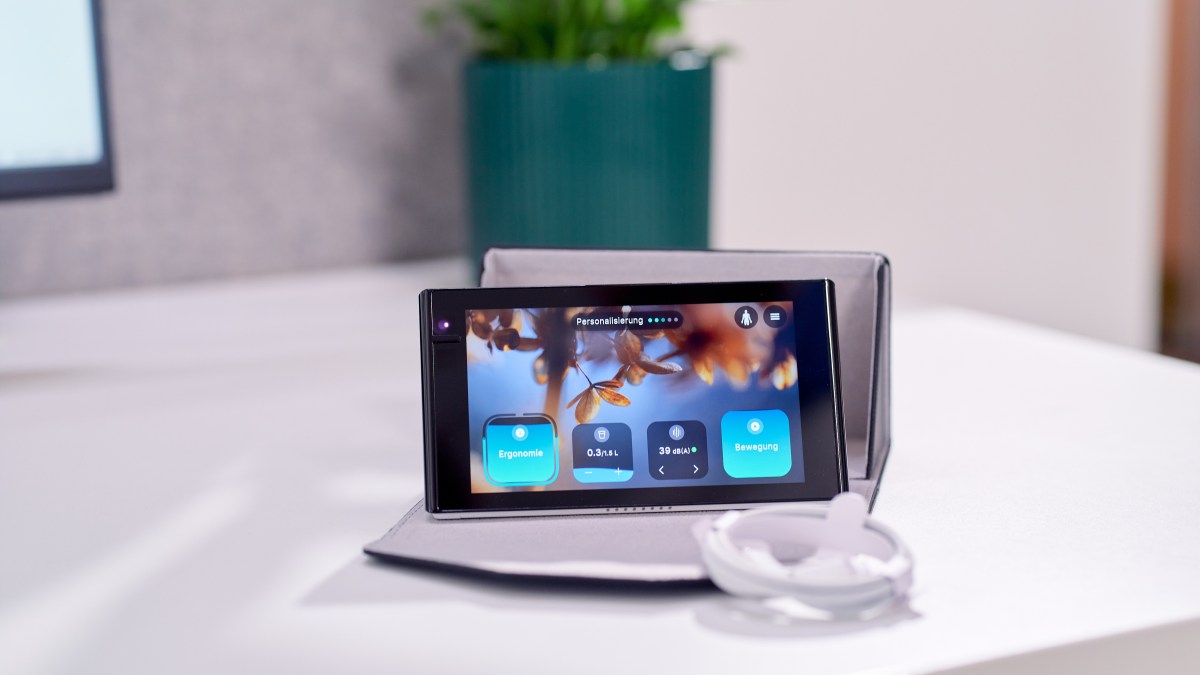
- Privacy-Centric Hardware: Isa uses Time-of-Flight (ToF) sensors to monitor posture and movement, entirely avoiding the privacy concerns associated with built-in cameras.
- Effective Habit Formation: The device uses visual indicators and haptic feedback to provide real-time, non-intrusive posture corrections, making it more effective than software-based nudges.
- Comprehensive Environmental Wellness: Beyond ergonomics, the device monitors air quality (CO2/VOC), light, sound, and hydration to ensure a healthy overall workspace environment.
Reimagining the Ergonomic Workspace
For those of us tethered to home offices, the quest for the perfect setup often ends in a graveyard of unused lumbar pillows and ergonomic chairs. Despite these hardware investments, the fundamental challenge remains: our posture inevitably degrades as the hours tick by. Enter Isa, an innovative desk gadget from German startup Deep Care that eschews the typical “smart app” notification cycle in favor of a dedicated, privacy-focused hardware solution.
Privacy-First Monitoring: No Cameras Allowed
In an era where “always-on” surveillance is an industry standard, Isa stands out as a radical departure. By utilizing a Time-of-Flight (ToF) 3D depth sensor—similar to the technology found in advanced smartphone facial recognition—the device monitors your posture, movement, and environment without ever needing a camera. This design choice provides a significant layer of security, ensuring that sensitive video data never enters the cloud or a potential database.
The device is built on a robust architecture, featuring a quad-core 2 GHz processor and a suite of integrated sensors, including:
- Environmental Monitoring: CO₂/VOC levels, ambient light, sound levels, and temperature/humidity.
- Movement Tracking: ToF 1D sensors, gyroscopes, and barometric tracking.
- Hydration Sensing: A beta feature that logs water intake via gesture recognition.
The Psychology of the Nudge
The core of Isa’s effectiveness lies in its 5.5-inch IPS HD display. Rather than overwhelming the user with data, it uses an intuitive, Apple Watch-inspired “squircle” ring. When your posture slips, the ring transitions from green to yellow, providing a non-intrusive, visual cue to straighten up. If the slouching persists, the device triggers a subtle vibration, effectively “shaming” the user into better habits without the need for intrusive push notifications on a desktop.
During testing, this “nudge” methodology proved far more effective than traditional tracking apps. It turns posture correction into a habit-forming game rather than an administrative chore. Furthermore, the inclusion of on-device guided movement exercises ensures that desk-bound workers get the necessary breaks to mitigate the physical toll of sedentary work.
Room for Improvement
While the hardware is impressive, the software ecosystem is currently in its infancy. With support currently limited to EU and US time zones, global users may find the lack of regional customization a drawback. Additionally, the ToF sensor—while private—can occasionally mistake inanimate objects for users, requiring a degree of spatial awareness in your desk layout. However, for a first-generation device, the trade-offs are minor compared to the tangible health benefits it offers.
Deep Care, founded by former Bosch engineers, has successfully bridged the gap between complex health data and simple, actionable desk hardware. For the remote professional looking to preserve their back health without sacrificing their digital privacy, Isa is a sophisticated, offline alternative to the current glut of wearable trackers.