The Starship Paradox: Is SpaceX’s Reusability Ambition Facing a Reality Check?

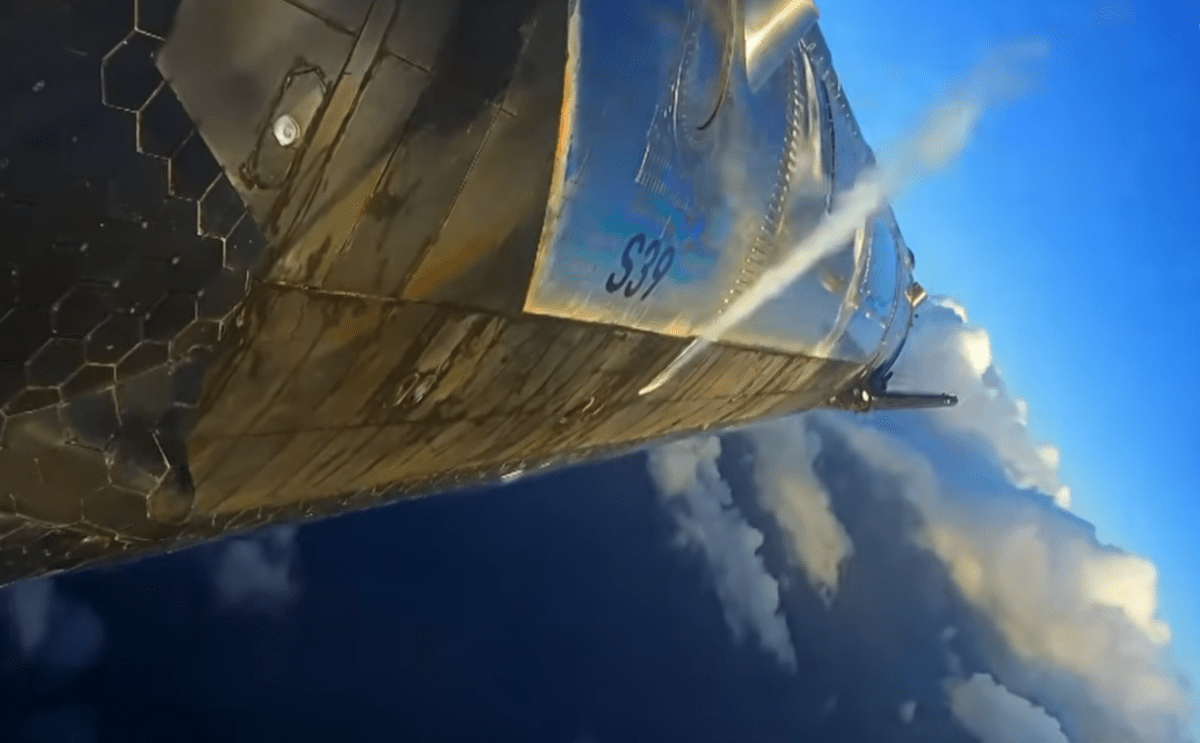
- SpaceX’s latest S-1 filing suggests that full reusability for Starship may not be immediately achieved, potentially leading to higher-than-expected launch costs.
- The company faces a significant 'capital expenditure treadmill' as it spends more on maintaining its Starlink satellite network than on Starship development.
- Technical failures during recent flight tests, particularly regarding Raptor engine relights, pose a major hurdle for the company’s vision of sustainable, low-cost orbital access.
The Economic Tightrope of SpaceX’s Starship
As SpaceX pivots to its post-IPO landscape, the recent S-1 filing has ignited a debate among industry analysts: is the dream of fully reusable, low-cost space transit slipping away? While Elon Musk has long championed Starship as the holy grail of orbital logistics, recent technical hurdles and financial disclosures suggest a much more complex path ahead for the aerospace giant.
The Starlink Capital Expenditure Treadmill
SpaceX’s current financial stability rests heavily on the shoulders of Starlink. Generating $11.4 billion in revenue last year, the satellite constellation is the primary engine of the company’s valuation. However, this success hides a demanding reality: the need to replace roughly 20% of its orbital fleet annually. To date, SpaceX has poured $11.4 billion into satellite operations—outstripping the $8.4 billion invested in Starship development—highlighting the massive capital expenditure required to keep the lights on in space.
The Reusability Dilemma
The core promise of Starship was radical cost reduction through full reusability. Yet, the recent S-1 filing acknowledges a sobering possibility: Starship may be forced into an expendable launch model to support upcoming, higher-throughput satellite deployments. Industry experts, including analyst Tim Farrar, warn that without achieving rapid, full reusability, Starship’s launch costs could plateau near those of the Falcon 9—roughly $100 million per mission.
This economic stagnation is exacerbated by technical setbacks observed during the latest test flight. Failures in relighting the Raptor engines for controlled atmospheric reentry indicate that the mission-critical systems required for safe recovery remain works in progress. If SpaceX cannot master these maneuvers, the dream of frequent, cheap launches becomes mathematically harder to justify.
Future-Proofing or Financial Risk?
SpaceX’s long-term business model assumes that massive scale-up in orbital capacity—launching larger, more powerful satellites at a fraction of today’s costs—will drive profitability. However, with Starlink’s user growth showing signs of slowing and intense competition from terrestrial fiber, the margin for error is shrinking. If Starship remains a semi-expendable vehicle, ambitious projects like orbiting data centers and deep-space infrastructure may remain on the drawing board far longer than investors anticipated.
The coming year will be pivotal. As SpaceX transitions to launching next-generation satellites, the world will be watching to see if the company can evolve Starship from an experimental heavy-lifter into the reliable, reusable workhorse that Musk promised would revolutionize the space economy.