Apple Revolutionizes Automation: Building Workflows with AI in iOS 27

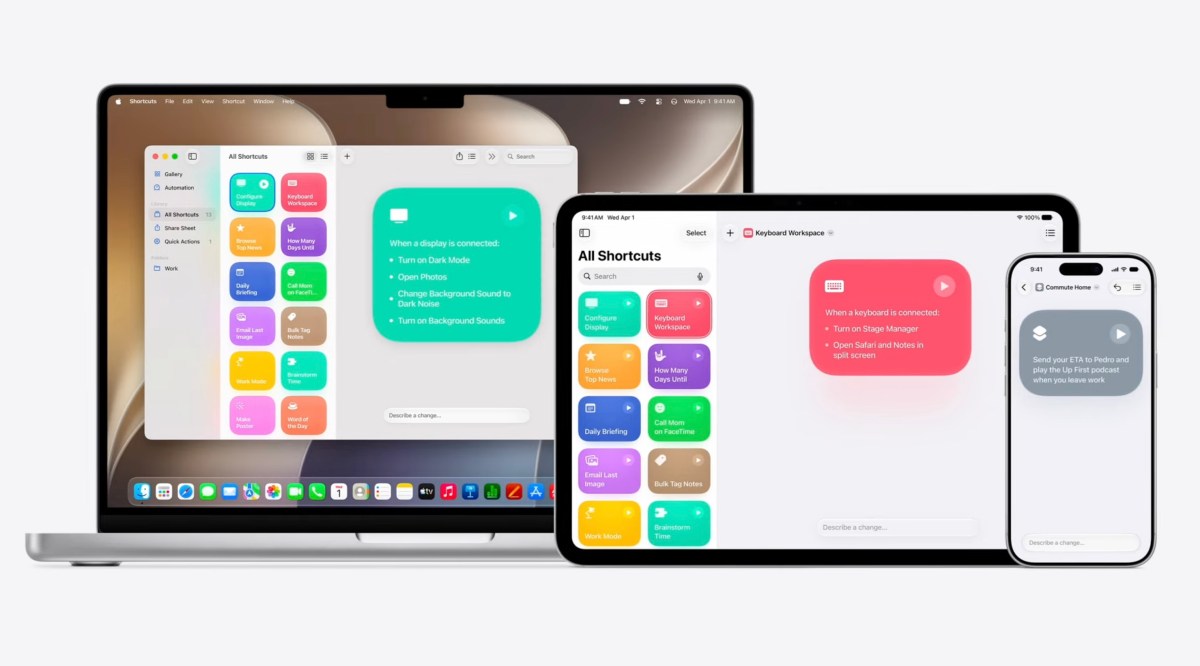
- Apple is integrating 'Apple Intelligence' into the Shortcuts app, allowing users to build complex automations using simple natural language prompts.
- The update eliminates the need for manual script building, making advanced automation accessible to non-technical users.
- Users can refine their automated workflows through conversational follow-up prompts, with a full rollout scheduled for iOS 27 this fall.
Democratizing Automation Through Apple Intelligence
For years, Apple’s Shortcuts app has served as a powerhouse tool for tech enthusiasts and power users. While capable of performing intricate cross-app automations, the steep learning curve often alienated casual users. With the upcoming release of iOS 27, Apple is fundamentally changing this narrative by integrating its advanced AI suite, Apple Intelligence, directly into the Shortcuts interface.
Natural Language Processing: From Code to Conversation
The core update centers on a shift from manual, block-based visual scripting to natural language processing. Instead of navigating complex menus to find specific variables or app triggers, users can now simply describe their desired workflow in plain English. The AI engine then interprets these commands, identifying the necessary system and app actions required to execute the request seamlessly.
During the recent Worldwide Developers Conference (WWDC), Celcia Dantas, Sr. Manager of Home Software Product Marketing, highlighted how this removes the “complication barrier” that previously hindered adoption among non-technical users.
Real-World Implementation: Smart Commuting
To demonstrate the capability, Apple provided a compelling use case: the “Leaving Work” automation. Instead of manually constructing a sequence of triggers, a user can simply prompt the app with a request. The system then autonomously:
- Identifies the trigger (leaving the workplace).
- Accesses the stored home address.
- Calculates the precise ETA via Apple Maps.
- Sends an automated alert to a designated contact via Messages.
Iterative Editing and Future Outlook
The beauty of this AI-driven integration is its flexibility. Users are not locked into the initial result; they can provide follow-up prompts to refine or expand the workflow. For instance, a user could modify the aforementioned commute shortcut to automatically queue a favorite podcast as soon as the drive home begins.
As Apple continues to weave generative AI deeper into its ecosystem, the Shortcuts app is transitioning from a niche utility into an essential personal assistant. By lowering the barrier to entry, Apple is setting the stage for a new era of personalized, AI-augmented automation that is accessible to everyone, regardless of their technical expertise. Expect these features to arrive globally with the public launch of iOS 27 this fall.